

Sustainability · 2025
In this section51 topics
- Sustainability Policy3 items
- Sustainability Goals & UN SDGs3 items
- Policy Review2 items
- Business Value Chain1 item
- Stakeholder Analysis2 items
- Environmental Policy & Guidelines4 items
- Environmental Policy Review1 item
- Energy — Plan & Guidelines3 items
- Energy — Electricity Consumption1 item
- Energy — Fuel Consumption1 item
- Energy — Targets2 items
- Energy — Performance & Outcomes2 items
- Water — Plan & Guidelines2 items
- Water — Withdrawal, Discharge & Consumption1 item
- Water — Targets2 items
- Water — Performance & Outcomes2 items
- Waste — Plan & Guidelines2 items
- Waste — Generation, Disposal & Recycling1 item
- Waste — Targets2 items
- Waste — Performance & Outcomes2 items
- GHG — Plan & Guidelines3 items
- GHG — Emissions1 item
- GHG — Emissions Verification3 items
- GHG — Principles & Standards1 item
- GHG — Targets1 item
- GHG Targets — Net Zero1 item
- GHG Targets — Carbon Neutrality1 item
- GHG — Performance & Outcomes2 items
- Environmental Legal Incidents1 item
- Social Sustainability — Overview1 item
- Social Policy & Guidelines4 items
- Social Policy Review2 items
- Social — Principles & Standards Practised1 item
- Human Rights Due Diligence3 items
- Employees — Plan & Guidelines3 items
- Employees — Workforce1 item
- Employees — Remuneration & Provident Fund1 item
- Employees — Training & Development1 item
- Employees — Occupational Health & Safety1 item
- Employees — Labour Relations1 item
- Employees — Employee Representation2 items
- Employees — Targets2 items
- Employees — Performance & Outcomes2 items
- Customers — Plan & Guidelines3 items
- Customers — Satisfaction Results1 item
- Customers — Targets2 items
- Customers — Performance & Outcomes2 items
- Community & Social — Plan & Guidelines3 items
- Community & Social — Targets2 items
- Community & Social — Performance & Outcomes2 items
- Law Violation Incidents1 item
Sustainability Policy
Has a Sustainability Policy
Yes
Policy Description
In 2025, the Company remained committed to continuous sustainability development, driving the organization forward amidst rapid global changes. Building on a foundation of sustainable growth, the Company prioritizes business operations under the principles of Good Corporate Governance, the Code of Conduct (CoC), and Anti-Corruption policies. Sustainability goals and development principles have been integrated into the core business strategy. The Company has adopted the United Nations Sustainable Development Goals (SDGs) as a framework for defining its sustainable business objectives, alongside ISO standards to drive concrete implementation throughout the value chain. By considering the impacts on stakeholders, society, and the environment, the Company has achieved continuous advancement across all sustainability dimensions. This progress is reflected in the Company’s 2025 performance, notably its selection for the Thailand Sustainability Investment (THSI) list by the Stock Exchange of Thailand for the third consecutive year since its listing.
The Company has established a clear sustainability development strategic plan. Under the Sustainability Business Plan 2025–2029, the Company has defined management targets to drive corporate progress, using Key Performance Indicators (KPIs) aligned with its Vision and Mission. The policies and operational goals for each dimension are as follows:
Environmental Dimension (E)This refers to conducting business alongside environmental conservation, a critical global priority. The focus is on mitigating global warming and addressing Climate Change through initiatives such as pollution prevention, the reduction of Greenhouse Gas (GHG) emissions, and the efficient use of resources (Resource Efficiency).
Social Dimension (S)This refers to business operations that emphasize Service Quality, ensuring convenience, speed, and safety. This dimension encompasses Occupational Health and Safety, community and stakeholder relations, as well as Human Rights and equality within the workplace and society.
Governance (G)and Economic DimensionThis focuses on corporate governance to ensure stable returns and transparency. It involves robust oversight and checks-and-balances mechanisms, strictly adhering to laws, rules, and regulations. Furthermore, it includes preparedness for business expansion through investments, participating in government Public-Private Partnership (PPP) auctions, and the continuous development of a high-performance workforce.
Policy Document Link
https://www.tollway.co.th/en/sustainability/sustainability-management-policy-and-targets
Sustainability Goals & UN SDGs
Has Sustainability Goals
Yes
Goals Description
The company assesses and reviews key sustainability issues to align its organizational development with the objectives, expectations, needs, and concerns of stakeholders. It analyzes potential future trends (Mega Trends) for 2025-2029, conducts internal and external factor analysis using SWOT Analysis and PESTEL, and assesses risks and opportunities to formulate strategies and business plans that address various challenges. The company recognizes the importance of continuous adaptation and development to maintain stability, achieve sustainable growth, and comply with the terms of the concession agreement, including its rights and responsibilities.
The company assesses key sustainability issues related to its business operations in alignment with the Global Reporting Initiative (GRI) 2021 standards. This ensures that the company's sustainability policies and initiatives are implemented effectively across environmental, social, governance, and economic aspects (ESG), while also considering human rights issues.
No. | Stakeholder Needs & Expectations | Targets | DMT Performance 2025 |
1 | (E) Environmental & Air Pollution Management | Compliance with legal monitoring for noise, dust, air quality, and wastewater. |
|
2 | (E) Energy Management & GHG Reduction | Implementation of the Decarbonization Roadmap in accordance with ISO 14064-1: 2018. |
|
3 | (E) Social & Environmental Operations | Preparation of ESG / Sustainability Report. | Achieved 100% completion based on sustainability assessment criteria. |
4 | (S) Toll Management, Benefits, and Service Value | Customer Satisfaction. |
|
5 | (S) Excellence in Service | Compliance with DOH KPIs (Department of Highways). | Achieved 100% compliance with Department of Highways regulations. |
6 | (S) Ocupational Health and Safety | Operation under safety management standards. | Maintained ISO 45001 certification. |
7 | (S) Human Rights | Implementation of activities as per regulatory requirements. | Honored with the "Outstanding" Human Rights Model Organization Award 2025. |
8 | (G) Good Corporate Governance | Oversight of activities as per governance requirements. |
|
9 | (G) Business Development & Security | Establishment of a long-term strategic plan. |
|
10 | (G) Sustainability Risk Management | Risk management and Business Continuity Planning (BCP). |
|
11 | (G) Public Relations & Information Disclosure | Communication of material information to society, communities, shareholders, and investors. |
|
12 | (G) Technology Integration for Operational Efficiency | Development of Product & Service Innovation. |
|
UN Sustainable Development Goals
| SDG Goal |
|---|
| Goal 1 No Poverty |
| Goal 1 No Poverty |
| Goal 2 Zero Hunger |
| Goal 2 Zero Hunger |
| Goal 3 Good Health and Well-being |
| Goal 3 Good Health and Well-being |
| Goal 4 Quality Education |
| Goal 4 Quality Education |
| Goal 6 Clean Water and Sanitation |
| Goal 6 Clean Water and Sanitation |
| Goal 8 Decent Work and Economic Growth |
| Goal 8 Decent Work and Economic Growth |
| Goal 10 Reduce Inequalities |
| Goal 10 Reduce Inequalities |
| Goal 11 Sustainable Cities and Communities |
| Goal 11 Sustainable Cities and Communities |
| Goal 13 Climate Action |
| Goal 13 Climate Action |
| Goal 15 Life on Land |
| Goal 15 Life on Land |
| Goal 16 Peace, Justice and Strong Institutions |
| Goal 16 Peace, Justice and Strong Institutions |
| Goal 17 Partnerships for the Goals |
| Goal 17 Partnerships for the Goals |
Policy Review
Policy Reviewed This Year
Yes
Policy Changed This Year
No
Business Value Chain
Value Chain Description
In order to create a sustainable business plan, a value chain analysis is required in order to analyze the organization’s activities from start to finish. The information is used for assessing stakeholders and risks in each activity or deliver value to that activity to achieve sustainability. The Company’s activities, which are the concessionaire for the concession tollway service, have a value chain from starting to finishing activities, as follows:
Stakeholder Analysis
Introduction
Every group of stakeholders is vital to the Company’s business operations and plays an important role in the Company’s sustainable growth. Therefore, the Company gives great importance on taking into consideration opinions of stakeholders as part of organizational development, in which roles of each stakeholder group are assessed and analyzed through consideration of the impact from the Company’s operation. Stakeholders can be classified into 8 groups: government agencies and relevant regulatory bodies, shareholders, employees, tollway users, suppliers and partners, creditors, companies in the same industry, and community, society and environment.
The Company emphasizes on engagement with all groups of stakeholders in order to know their expectations and concerns that each group places most importance on. As a result, two-way communication channels are established to promote knowledge and understanding with stakeholders, including giving stakeholders the opportunity to express their ideas, whistle blowing, and complaints via various channels such as email, telephone, letter, etc. The Company is to collect these feedbacks from stakeholders to develop and improve towards more efficiency and consistency with sustainable operations.
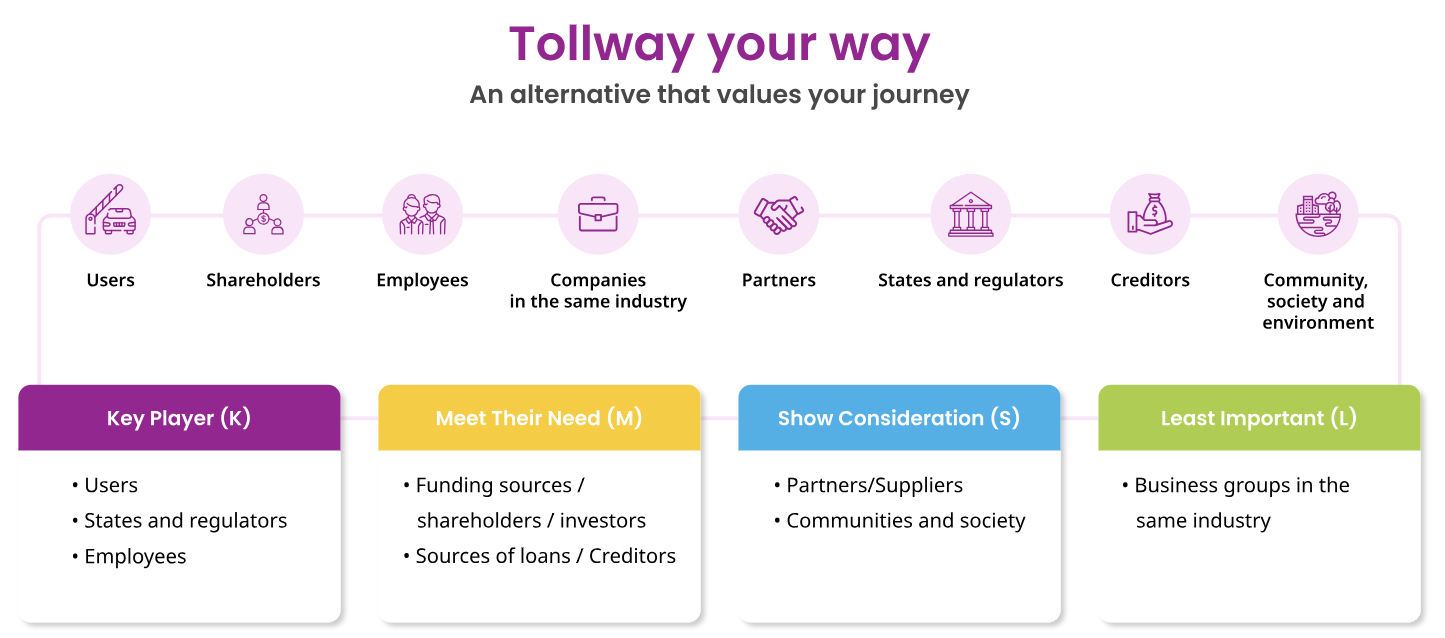
Stakeholder Analysis
| Stakeholder Type | Stakeholders | Stakeholder Expectations | Response to Expectations | Communication Activities |
|---|---|---|---|---|
| External stakeholders | 2931 · Description: Government agencies and Regulators | - Strict compliance with relevant laws
- Support government projects that are beneficial to society
- Fair and transparent business operations (corporate governance)
- Management in compliance with the concession contract
- Sufficient and timely disclosure of information
| - Comply with the concession contract, rules and regulations related to conducting business correctly and transparently
- Inspect operations of various departments within the Company to be accurate and transparent as required by law through the Legal and Compliance Project
- Cooperate with the government sector to promote the implementation of environmentally friendly projects
- Participate in supporting government policies and projects to promote national development, such as human rights, etc.
| 2938 · Description: Visit · 2941 · Description: Online Communication · 2943 · Description: External Meeting · 2945 · Description: Complaint Reception · 2947 · Description: Satisfaction Survey |
| Internal stakeholders | 2913 · Description: Shareholders | - Good governance and transparency
- Effective management
- Return on investment
- Good turnover and operating results
| - Reporting the results of various operations with transparency, including building confidence in being an organization with transparent operations | 2938 · Description: Visit · 2941 · Description: Online Communication · 2944 · Description: Annual General Meeting (AGM) · 2945 · Description: Complaint Reception · 2947 · Description: Satisfaction Survey |
| Internal stakeholders | 2921 · Description: Employees | - Career advancement
- Fair remuneration
- Potential development
- Health care and safety
- Work-life balance
- Proper welfare
| - The Company cares for its employees under the HPO Resilience strategy, in line with employees’ needs and expectations
- Compensation and benefits as follows:
o Employ external consultants
o Prepare job evaluations and improve the
salary structure
o Organizational structure
o Communicate with employees on methods
for annual salary adjustments
- Review welfare
o Increase the sum insured for group
accident insurance
o Increase credit limit
- Performance evaluation : communicate to create understanding with supervisory level executives regarding performance evaluation
- Progress and development : organize online training and knowledge development through E-Learning and other projects to support employee development
- Continuous care on COVID-19 such as booster vaccines, ATK Vending Machine, promote health care, influenza vaccines, improve working environments such as smoking areas, fitness rooms, installation of air purifiers at 9 toll booths, etc.
- Communication: employees meet with MD, department managers meet with MD, employees with performance recognition meet MD | 2940 · Description: Social Event · 2941 · Description: Online Communication · 2942 · Description: Internal Meeting · 2945 · Description: Complaint Reception · 2946 · Description: Employee Engagement Survey · 2947 · Description: Satisfaction Survey · 2948 · Description: Training / Seminar |
| External stakeholders | 2923 · Description: Customers | - Value of price
- Service quality and efficiency
- Cleanliness and safety of the routes
- Facilitate travel connections
- Personal data protection
| - Enhance speed of service standards
- Training in service development for toll collection employees
- Install an electric vehicle charging station at the MOC
- Strictly adhere to personal data protection policy
- Organize activities to thank users, namely Tollway Rally Thank you User, Tollway Lucky Way
- Held the “Journey of Dream” concert to thank customers and stakeholders for the Company’s 35th anniversary
- Implement the E-Tax system to help facilitate tollway users in accessing information through the online system.
- Expanded the 5% toll fee discount for 4-wheel vehicles
| 2938 · Description: Visit · 2939 · Description: Press Release · 2940 · Description: Social Event · 2941 · Description: Online Communication · 2945 · Description: Complaint Reception · 2947 · Description: Satisfaction Survey |
| External stakeholders | 2899 · Description: Suppliers · 2900 · Description: Business partners | - Efficiency of internal processes
- Effective coordination
- Fair treatment and transparency
- Being a good business partner and having a long-term relationship
| - Communicate the Supplier Code of Conduct to new and existing suppliers
- Communicate trade credit policies and terms
- Create a listening channel for opinions of suppliers and partners through the company website and purchasing officers
- Transparent purchasing
- Ensure product payments are on a timely manner
| 2938 · Description: Visit · 2940 · Description: Social Event · 2941 · Description: Online Communication · 2942 · Description: Internal Meeting · 2943 · Description: External Meeting · 2945 · Description: Complaint Reception · 2947 · Description: Satisfaction Survey · 2948 · Description: Training / Seminar |
| External stakeholders | 2894 · Description: Creditor | - On-time repayment
- Strict compliance to terms of contract
- Corporate governance and transparency
| - Strictly adhere to the terms of loan contract
- Strictly follow the rules and regulations of financial institutions which are regulated by the government sector
- Allow opportunities for new financial institutions to provide financial services
| 2938 · Description: Visit · 2940 · Description: Social Event · 2941 · Description: Online Communication · 2942 · Description: Internal Meeting · 2943 · Description: External Meeting · 2945 · Description: Complaint Reception · 2947 · Description: Satisfaction Survey |
| External stakeholders | 2898 · Description: Competitors | - Fair business competition | - Conduct business under competition according to free market mechanisms and comply with various laws, rules, and regulations related to conducting business correctly and transparently. | 2938 · Description: Visit · 2939 · Description: Press Release · 2940 · Description: Social Event · 2941 · Description: Online Communication · 2943 · Description: External Meeting · 2945 · Description: Complaint Reception · 2947 · Description: Satisfaction Survey |
| External stakeholders | 2902 · Description: Community · 2928 · Description: Society | - Operate with responsibility, prevention and mitigation of impacts on communities and the environment
- Organize activities for society and environment, as well as supporting public benefit activities
- Fair and transparent business operations
| - Conduct business with social and environment responsibility
- Organize vocational training, improve skills, and create income for the people of Lak si and Don Muang communities
- Support and participate in activities within the community, such as supporting special day activities (Children’s Day, Songkran Day) and other activities
| 2938 · Description: Visit · 2940 · Description: Social Event · 2941 · Description: Online Communication · 2943 · Description: External Meeting · 2945 · Description: Complaint Reception · 2947 · Description: Satisfaction Survey |
Environmental Policy & Guidelines
Has an Environmental Policy
Yes
Policy Description
The Company has established policies to contribute to environmental preservation, aiming to improve the health and well-being of communities and society. Furthermore, we promote environmental awareness, emphasizing that environmental stewardship is a collective responsibility. Energy and environmental conservation plans are integrated into every stage of our business operations, including procurement, service delivery, and waste management. We have also set targets to reduce greenhouse gas emissions from our business processes. As climate change continues to intensify, the Company has reviewed its environmental operational guidelines, utilizing an ESG Strategy to drive business operations that prioritize resource efficiency alongside climate change mitigation. This aligns with and supports national objectives; in 2025, the Company maintained its commitment to becoming a Net Zero organization by 2065.
In 2025, the Company initiated various activities and projects to support environmental conservation, particularly in energy management and climate change mitigation. Key initiatives include the installation of solar rooftops at toll plazas to increase the proportion of clean energy usage, the transition to Electric Vehicles (EVs) for executive seminars, waste segregation projects, and Green Procurement practices.
The Company is committed to minimizing the environmental impact of its operations by setting both short-term and long-term environmental management goals. Detailed information regarding these targets and the Company’s environmental performance is disclosed in the Sustainability Report.
Policy Document Link
https://www.tollway.co.th/en/sustainability/environment
Environmental Guidelines
| Guideline |
|---|
| Electricity Management |
| Fuel Management |
| Renewable/Clean Energy Management |
| Water Management |
| Waste Management |
| Greenhouse Gas and Climate Change Management |
| Air Quality Management |
| Noise Pollution Management |
Environmental Policy Review
Policy Reviewed This Year
Yes
Energy — Plan & Guidelines
Has an Energy Management Plan
Yes
Plan Description
The Company primarily uses energy from two main sources: electricity and fuel energy. Electricity is used to power lighting systems and electronic equipment along the elevated tollway, toll plazas, and the Main Operation Center (MOC) building, as well as server systems and digital equipment at the Operating Control Center (OCC) and roadside equipment under the Smart Project. Fuel energy is used for vehicles supporting various operational activities, including backup power generation, facilitation services, route maintenance, and infrastructure maintenance to ensure the safety of elevated tollway users. Recognizing the importance of efficient energy management, the Company focuses on reducing environmental and social impacts arising from resource consumption and air pollutant emissions. To achieve this, the Company has implemented both short-term and long-term initiatives aimed at reducing energy consumption. These initiatives include transitioning from internal combustion vehicles to electric vehicles, installing solar rooftop systems, participating in the Green Building assessment under the Thai’s Rating of Energy and Environmental Sustainability (TREES) by the Thai Green Building Institute (TGBI) for existing buildings under operation and maintenance (TREES-EB), and participating in the Green Office program organized by the Department of Climate Change and Environment, among others.
Plan Document Link
https://www.tollway.co.th/en/sustainability/environment
Energy — Electricity Consumption
Electricity Consumption
| Metric | Current Year | Previous Year | Two Years Ago |
|---|---|---|---|
| Total electricity consumption within the organization (Kilowatt-Hours) | 4,116,669 | 4,551,727 | 4,820,062 |
| Electricity purchased for consumption from non-renewable energy sources (Kilowatt-Hours) | 3,516,669 | 4,119,753 | 4,723,248 |
| Electricity purchased or generated for consumption from renewable energy sources (Kilowatt-Hours) | 600,000 | 431,974 | 96,814 |
Energy — Fuel Consumption
Fuel Consumption
| Metric | Current Year | Previous Year | Two Years Ago |
|---|---|---|---|
| Crude oil (Barrels) | |||
| Coal (Metric tonnes) | |||
| Jet fuel (Litres) | |||
| Diesel (Litres) | 130,835 | 134,472 | 136,787 |
| Gasoline (Litres) | 17,278 | 18,532 | 36,871 |
| Fuel oil (Litres) | |||
| Natural gas (Standard cubic feet) | |||
| LPG (Kilograms) | 540 | 300 | 2,250 |
| Steam (Metric tonnes) |
Energy — Targets
Has Set Targets
Yes
Targets
| Target | Base Year | Base Year Value | Target Year | Target Year Value | Target Change (%) | Unit | Per Unit (Intensity) | Per Unit — Please Specify |
|---|---|---|---|---|---|---|---|---|
| Reduction of electricity purchased for consumption | 2,023 | 4,723,248 | 2,024 | 472,324.8 | 10 | Kilowatt-hour | ||
| Reduction of electricity purchased and fuel consumption | 2,023 | 4,723,248 | 2,025 | 10 | Kilowatt-hour | Person(employee) | Person(employee) |
Energy — Performance & Outcomes
Has Performance Results
Yes
Performance Description
No. | Operations in 2024 | Area of operation | Performance Results |
1 | Installing a solar power generation system on the roof (Solar Rooftop) in 8 areas, size 180 KWp. |
|
|
2 | Install online electrical meters |
| Track electricity usage through a platform that can display the proportion of electricity usage in buildings in units (kWh) in real time. |
3 | Installing a solar power generation system on the roof (Solar Rooftop) to increase production capacity by 132.5 KWp | Main Operation Center: MOC | Completed in January 2025. |
4 | Install a 160 kW solar energy storage battery (Battery Energy Storage System: ESS) | Main Operation Center: MOC | Completed in January 2025. |
Water — Plan & Guidelines
Has a Water Management Plan
Yes
Plan Description
Water is a natural resource essential for business operations in all sectors. The company is committed to sustainable water resource management to prevent risks from water shortages or substandard wastewater quality. The company emphasizes maximizing water utilization in various organizational activities, taking care of natural water sources, and strictly complying with relevant laws.
Water — Withdrawal, Discharge & Consumption
Water Withdrawal, Discharge & Consumption
| Metric | Current Year | Previous Year | Two Years Ago |
|---|---|---|---|
| Total water withdrawal (Cubic meters) | 13,657 | 14,377 | 15,888 |
| Total water withdrawal by third-party water (Cubic meters) | |||
| Total water withdrawal by surface water (Cubic meters) | |||
| Total water withdrawal by groundwater (Cubic meters) | |||
| Total water withdrawal by seawater (Cubic meters) | |||
| Total water withdrawal by produced water (Cubic meters) | |||
| Percentage of wastewater treated before discharge (%) | |||
| Total water discharge (Cubic meters) | |||
| Total water discharge to third-party water (Cubic meters) | |||
| Total water discharge to surface water (Cubic meters) | |||
| Total water discharge to groundwater (Cubic meters) | |||
| Total water discharge to seawater (Cubic meters) | |||
| Total water consumption (Cubic meters) | 13,657 | 14,377 | 15,888 |
| Recycled water (Cubic meters) | 845.98 | 58.91 | 2.3 |
Water — Targets
Has Set Targets
Yes
Targets
| Target | Base Year | Base Year Value | Target Year | Target Year Value | Target Change (%) | Unit | Per Unit (Intensity) | Per Unit — Please Specify |
|---|---|---|---|---|---|---|---|---|
| Increase of recycled water for consumption | 2,023 | 2.3 | 2,025 | 30 | Cubic meters | |||
| Reduction of water consumption | 2,023 | 15,888 | 2,025 | 10 | Cubic meters | Person(employee) | Person(employee) |
Water — Performance & Outcomes
Has Performance Results
Yes
Performance Description
2024
Installed water volume meters with an Automatic Meter Reading (AMR) system, enabling data transmission to the management system for monitoring and reporting.
2025
Installed water-saving devices and sanitary fixtures in accordance with Green Building criteria.
Upgraded the water supply piping system at the Lak Si toll plaza building to prevent leakage.
Promoted water conservation campaigns through the Company’s electronic communication channels.
Achieved annual reductions in water consumption.
2024
Total water consumption: 14,377 cubic meters, representing a 15% reduction.
2025
Total water consumption: 13,657 cubic meters, representing a 14% reduction, exceeding the Company’s established target.
Waste — Plan & Guidelines
Has a Waste Management Plan
Yes
Plan Description
The company manages waste by sorting and disposing of it in accordance with the law. We promote reuse and recycling, such as recycling toll receipts and used paper into Green Way notebooks, which are donated to underprivileged schools nationwide. Moreover, the company has collaborated with GEPP Sa-Ard (Clean Collect), a waste management startup, to sort and utilize waste. We are also committed to enhancing sustainable waste management with the goal of achieving Zero Waste to Landfill by systematically sorting waste generated within the office and at toll booths, and utilizing some of the waste.
Waste — Generation, Disposal & Recycling
Waste Generation, Disposal & Recycling
| Metric | Current Year | Previous Year | Two Years Ago |
|---|---|---|---|
| Total waste generated (Kilograms) | 33,798 | 27,723 | 25,881 |
| Non-hazardous waste (Kilograms) | |||
| Non-hazardous waste - Landfilling (Kilograms) | |||
| Non-hazardous waste - Incineration (with energy recovery) (Kilograms) | |||
| Non-hazardous waste - Incineration (without energy recovery) (Kilograms) | |||
| Non-hazardous waste - Other disposal operations (Kilograms) | |||
| Hazardous waste (Kilograms) | |||
| Hazardous waste - Landfilling (Kilograms) | |||
| Hazardous waste - Incineration (with energy recovery) (Kilograms) | |||
| Hazardous waste - Incineration (without energy recovery) (Kilograms) | |||
| Hazardous waste - Other disposal operations (Kilograms) | |||
| Total reused/recycled waste (Kilograms) | 4,990 | 3,339 | 2,209 |
| Reused/Recycled non-hazardous waste (Kilograms) | |||
| Reused non-hazardous waste (Kilograms) | |||
| Recycled non-hazardous waste (Kilograms) | |||
| Reused/Recycled hazardous waste (Kilograms) | |||
| Reused hazardous waste (Kilograms) | |||
| Recycled hazardous waste (Kilograms) |
Waste — Targets
Has Set Targets
Yes
Targets
| Waste Type | Disposal Approach | Target | Base Year | Base Year Value | Target Year | Target Year Value | Target Change (%) | Unit |
|---|---|---|---|---|---|---|---|---|
| Non-hazardous waste | 2758 · Description: Reuse · 2759 · Description: Recycle | Increase waste utilization | 2,023 | 27,723 | 2,024 | 2,772.3 | 20 | Kilograms |
| Non-hazardous waste and hazardous waste | 2758 · Description: Reuse · 2759 · Description: Recycle | Increase waste utilization | 2,023 | 25,881 | 2,025 | 5 | Kilograms |
Waste — Performance & Outcomes
Has Performance Results
Yes
Performance Description
The Company adheres to the 3Rs principle of waste management: Reduce, Reuse, and Recycle, to mitigate environmental impacts from waste and garbage management, minimize the amount of waste sent to landfills, and seek opportunities to reuse waste for maximum benefit according to the circular economy principle. Aiming for the goal of zero landfill waste from business processes, the Company has developed a waste management concept based on the 3Rs principle, with activities and operations such as:
Green Office Project The Company participates in the Green Office project, which promotes effective waste management and the value of resources.
Care The Whale Project "Invisible Waste" is a collaborative project with the Stock Exchange of Thailand to reduce greenhouse gas emissions from waste management by applying the Circular Economy principle and recording waste management data through the Climate Care Platform – Care the Whale.
Utilizing dust from street sweepers The Company is conducting research and experimentation on the use of dust from the Company's street sweepers and ways to reduce plastic waste by combining both parts to produce decorative materials and walkway paving materials. The Company collaborates with experts in plastic recycling with international standards, including the Industrial Development Foundation, the Plastics Institute, Zero Waste Yolo Co., Ltd., and GEPP Sadjad Co., Ltd., to support the research and experimentation project. This is to reduce waste and utilize it effectively.
Public relations and awareness-raising on proper waste management Through public relations, the 5S project, campaigns for waste separation and proper disposal, reducing paper usage, reducing foam container usage, reducing plastic bottle usage, etc.
The “Greenway Notebook” project under the concept of efficient resource utilization and circular economy (Circularity). The initiative involves collecting used paper through 18 paper collection boxes located in Bangkok and Pathum Thani, including placements at government agencies, private companies, and shopping centers. The collected paper is then sent through a recycling process and repurposed into student notebooks.
GHG — Plan & Guidelines
Has a GHG Management Plan
Yes
Plan Description
The Climate Change Policy is integrated into the corporate sustainability strategy, with the objective of enabling the Company to operate with resilience within the context of climate change. Furthermore, the policy aims to contribute to the reduction of greenhouse gas emissions at the industry level.
The Company has established the Crisis Readiness and Climate Change Management Working Group. This body is responsible for analyzing and assessing systemic risks related to climate change to mitigate or prevent greenhouse gas emissions. Its duties include developing operational and climate change risk management plans, as well as identifying corporate-level risks and opportunities. These assessments cover Transition Risks, such as evolving laws, regulations, and shifting customer preferences toward eco-friendly products and services. They also encompass Physical Risks, such as extreme weather, storms, and flooding, which could lead to supply chain disruptions and resource procurement failures, potentially impacting the Company’s ability to serve its users. Furthermore, the Company is currently developing Scenario Analysis models to evaluate business impacts under global warming scenarios of 1.5 Celsius and 2 Celsius, in alignment with the TCFD (Task Force on Climate-related Financial Disclosures) framework. This initiative aims to ensure preparedness and the establishment of sustainable business risk management measures.
The Company has implemented its Decarbonization Roadmap across all operational processes to reduce corporate greenhouse gas emissions. Consequently, the Company has established corporate-level greenhouse gas reduction strategies as follows:
Renewable Energy Adoption:Implementation of Solar Rooftop power generation systems at the Main Operation Center (MOC) and all 9 toll collection plazas. This includes the installation of a Battery Energy Storage System (BESS) at the MOC. Furthermore, the Company has deployed Smart Power Boxes and two clean energy charging stations to serve company operational vehicles and Don Muang Tollway users.
Waste and Refuse Management:Transforming food waste into organic fertilizer with a commitment to "Zero Waste to Landfill." This is achieved through a systematic waste segregation process at the headquarters and toll plazas, ensuring that various types of waste are repurposed or recycled effectively.
Green Procurement:Establishing environmental guidelines through procurement and supplier selection policies. This includes prioritizing products with "Green Labels" and conducting supplier assessments that emphasize compliance with rigorous environmental standards.
Cultivating a Climate-Conscious Corporate Culture:Promoting climate change awareness through employee training programs and internal carbon reduction initiatives. The Company encourages active participation in energy conservation across all departments.
Electronic Payment Systems:Development of comprehensive payment solutions to meet diverse user needs, including M-Pass / Easy Pass, QR Payment, and EMV Contactless. These systems aim to reduce pollution and emissions at toll booths. Additionally, the Company is currently piloting the "Multi Smart Payment" automated system.
Furthermore, the Company has set a medium-term target to reduce greenhouse gas emissions from its operations (Scope 1, Scope 2, and Scope 3) by at least 26% by 2028, compared to the 2023 base year. With this unwavering commitment, the Company aims to be an environmental leader and is prepared to tangibly support the transition toward a low-carbon economy.
Plan Document Link
https://www.tollway.co.th/en/sustainability/environment
GHG — Emissions
GHG Emissions
| Metric | Current Year | Previous Year | Two Years Ago |
|---|---|---|---|
| Total GHG emissions (Metric tonnes of carbon dioxide equivalent) | 2,698 | 3,086 | 3,504 |
| Total greenhouse gas emissions 1 (Metric tonnes of carbon dioxide equivalent) | 427 | 456 | 507 |
| Total greenhouse gas emissions 2 (Metric tonnes of carbon dioxide equivalent) | 1,758 | 2,060 | 2,362 |
| Total greenhouse gas emissions 3 (Metric tonnes of carbon dioxide equivalent) | 513 | 570 | 635 |
GHG — Emissions Verification
Emissions Verified by a Third Party
Yes
Verifying Body
2648
Verification Document Link
https://eonemedia.setlink.set.or.th/report/1054/2025/1773880149311.pdf
GHG — Principles & Standards
Principles & Standards Applied
| Standard |
|---|
| 2671 |
| 2677 |
GHG — Targets
Has Set GHG Targets
Yes
GHG Targets — Net Zero
Net Zero Targets
| Emission Scope | Base Year | Base Year Emissions | Near-term Target Year | Near-term Target Value | Near-term Target Change (%) | Long-term Target Year | Long-term Target Change (%) | Target Year | Target Year Emissions | Target Change (%) | Unit |
|---|---|---|---|---|---|---|---|---|---|---|---|
| 2716 | 2,023 | 3,504 | 2,024 | 350.4 | 10 | 2,065 | 100 | 2,024 | 350.4 | 10 | Metric tonnes of carbon dioxide equivalent |
GHG Targets — Carbon Neutrality
Carbon Neutrality Targets
| Emission Scope | Carbon Neutrality Certified | Base Year | Base Year Emissions | Target Year | Unit |
|---|---|---|---|---|---|
| 2716 | N | 2,023 | 3,504 | 2,050 | Metric tonnes of carbon dioxide equivalent |
GHG — Performance & Outcomes
Has Performance Results
Yes
Performance Description
Operating Results: The Company has reviewed and obtained ISO 14064-1: 2018 certification. The Company has a Decarbonization Roadmap included in its 2025 annual business plan and 5-year framework (2025-2029). In addition, the Company has started to establish a baseline year, setting targets based on the Science Based Targets initiative (SBTi) to proceed with obtaining certification for corporate carbon footprinting. The data from 2023 will be used as the base year (data collection period from January 1, 2023, to December 31, 2023), which has been reviewed by Bureau Veritas (Thailand) Limited. This consultant, registered with the Thailand Greenhouse Gas Management Organization (Public Organization) (TGO), assessed, verified greenhouse gas emissions, and prepared the Company's GHG emissions data report. The Company received certification for its Corporate Carbon Footprint (CFO) .
Environmental Legal Incidents
Legal Violation Incidents
| Metric | Current Year | Previous Year | Two Years Ago |
|---|---|---|---|
| Number of cases or incidents of legal violations or negative environmental impact (cases) | 0 | 0 | 0 |
Employees — Plan & Guidelines
Has an Employee Management Plan
Yes
Plan Description
The Company places strong emphasis on sustainable human resource management under the HPO & Smart Working Place strategy, guided by the employee care framework and the “Best Employer” approach. These initiatives support operations aligned with the Company’s core values, “CAT,” to drive organizational efficiency while ensuring a workplace free from discrimination. The Company aims to foster employee happiness and pride in their roles by creating a supportive working environment that encourages learning and prepares employees to adapt to technological changes in the digital era. In addition, the Company promotes diversity and equality within the organization, cultivating an open and inclusive culture that respects differences, enabling all employees to grow to their full potential. The Company also prioritizes employees’ quality of life through the continuous improvement and development of comprehensive and balanced welfare programs, while instilling ethics and integrity to encourage employees to contribute positively to the organization, society, and the environment.
The Company has established strategic plans for employee care and development through the HPO & Smart Working Place Working Committee, which formulates both short-term and long-term plans to enhance the organization’s capabilities and strengthen its competitiveness in the future while preparing for technological changes. These initiatives enable the Company to maintain continuous business operations without disruption. The strategy focuses on developing employee capabilities to move the organization forward, while also improving various work processes and working arrangements to enhance employees’ quality of life. In addition, the Company has established key performance indicators (KPIs) for effective human resource management, along with continuous development programs for personnel at all levels.
In 2025, the Company implemented comprehensive employee governance initiatives throughout the year, covering compensation and welfare management, career advancement, workplace environment, and the overall quality of employees’ lives. In particular, regarding career development, the Company manages its workforce in alignment with the business growth plan, providing opportunities for internal mobility and career growth through Job Rotation for Development. The Company also continuously promotes employee learning and development (Learning and Development) and encourages agile learning practices to support business expansion and adaptability.
Plan Areas
| Plan Area |
|---|
| Fair employee compensation |
| Employee training and development |
| Promoting employee relations and participation |
| Child labor |
| Occupational health and safety in workplace |
Employees — Workforce
Workforce Data
| Metric | Current Year | Previous Year | Two Years Ago | Remark |
|---|---|---|---|---|
| Total number of employees (Persons) | 328 | 354 | 373 | |
| Number of male employees (Persons) | 170 | 184 | 192 | |
| Number of female employees (Persons) | 158 | 170 | 181 | |
| Total employment of disabled persons (people) | 3 | 3 | 3 | |
| Total disabled employees (people) | 3 | 3 | 3 | |
| Total male disabled employees (people) | 2 | 2 | 2 | |
| Total female disabled employees (people) | 1 | 1 | 1 | |
| Total disabled workers who are non-employee (people) | ||||
| Contributions to the fund for promoting and improving the quality of life for disabled persons | 0 | 0 | 0 | To promote and sustainably improve the quality of life for persons with disabilities, the company has been supporting job creation and career development under Section 35 (7) of the Persons with Disabilities Empowerment Act, B.E. 2550 (2007) since 2017. In collaboration with the Thai Chamber of Commerce, the Thai Chamber of Commerce Foundation, and the COERR Foundation, the company has organized training programs, including the "Egg-Laying Chicken Farming" course. This training covers both theoretical and practical aspects, equipping persons with disabilities with the necessary skills to establish a sustainable livelihood for themselves and their families. Additionally, this initiative enables them to contribute as a valuable force in the nation’s development. |
| Total number of male employees in operational level (Persons) | 148 | 157 | 165 | |
| Total number of male employees in management level (Persons) | 17 | 20 | 23 | |
| Total number of male employees in executive level (Persons) | 5 | 7 | 4 | |
| Total number of female employees in operational level (Persons) | 141 | 151 | 160 | |
| Total number of female employees in management level (Persons) | 14 | 16 | 19 | |
| Total number of female employees in executive level (Persons) | 3 | 3 | 2 |
Employees — Remuneration & Provident Fund
Remuneration & Provident Fund
| Metric | Current Year | Previous Year | Two Years Ago |
|---|---|---|---|
| Total disabled employees (people) | 244,110,000 | 249,400,000 | 247,570,000 |
| Total male employee remuneration (Baht) | 126,520,000 | 129,630,000 | 127,440,000 |
| Total female employee remuneration (Baht) | 117,590,000 | 119,770,000 | 120,130,000 |
| Number of employees eligible to participate in PVD (persons) | 328 | 354 | 373 |
| Total number of employees joining employee provident fund (Persons) | 263 | 277 | 239 |
| Percentage of total number of employees joining employee provident fund to total number of employees (%) | 80.18 | 78.25 | 64.08 |
| Number of PVD members / Total eligible employees (%) | 80.18 | 78.25 | 64.08 |
| Total amount of provident fund contributed by the Company (Baht) | 7,791,069 | 7,843,000 | 7,354,000 |
| Total amount of provident fund contributed by employee (baht) |
Employees — Training & Development
Training Data
| Metric | Current Year | Previous Year | Two Years Ago |
|---|---|---|---|
| Average employee training hours (Hours / Person / Year) | 69 | 56 | 61.46 |
| Employee development and training expenses (baht) | 3,015,556 | 3,455,870 | 2,012,060 |
Employees — Occupational Health & Safety
Occupational Health & Safety Data
| Metric | Current Year | Previous Year | Two Years Ago |
|---|---|---|---|
| Total number of lost time injury incidents by employees (Cases) | 5 | 0 | 1 |
Employees — Labour Relations
Labour Relations Data
| Metric | Current Year | Previous Year | Two Years Ago |
|---|---|---|---|
| Total voluntary resignations (Persons) | 45 | 37 | 38 |
| Male employees who voluntary resigned (Persons) | 20 | 16 | 20 |
| Female employees who voluntary resigned (Persons) | 25 | 21 | 18 |
| Percentage of employee turnover leaving the Company voluntarily (%) | 13.72 | 10.45 | 10.19 |
| Evaluation result of employee engagement | 1 | 1 | 1 |
Employees — Employee Representation
Employees Are Represented Collectively
Yes
Forms of Representation
| Form |
|---|
| Welfare committee |
Employees — Targets
Has Set Employee Targets
Yes
Targets
| Indicator | Target Areas | Base Year | Base Year — Description | Target Year | Target Year — Description |
|---|---|---|---|---|---|
| Employee Engagement Score | 2985 · Description: Promoting employee relations and participation | 2,023 | > 60% | 2,024 | > 65% |
| Employee engagement level | 2985 · Description: Promoting employee relations and participation | 2,024 | 73.20% | 2,025 | 72.33% |
Employees — Performance & Outcomes
Has Performance Results
Yes
Performance Description
In 2025, the Company implemented comprehensive employee governance initiatives throughout the year, covering compensation and welfare management, career advancement, workplace environment, and the overall quality of employees’ lives. In particular, regarding career development, the Company manages its workforce in alignment with the business growth plan, providing opportunities for internal mobility and career growth through Job Rotation for Development. The Company also continuously promotes employee learning and development (Learning and Development) and encourages agile learning practices to support business expansion and adaptability.
In the same year, the Company conducted an Employee Engagement Survey among all employees to gather feedback and improve its operations in line with employees’ expectations and needs. The survey achieved a participation rate of 91.77% of total employees, and the overall employee engagement score reached 72.33%, indicating that employees are engaged with the organization.
Performance and Key Indicators
Operational Targets | 2023 | 2024 | 2025 |
Proportion of female employees in executive and management positions | |||
Target (%) | 50% | 50% | 50% |
Proportion of female employees in executive and management positions (%) (Long-term target: 50% by 2029) | 43.75% | 41.30% | 43.59% |
Employee Engagement Survey Results | |||
Target (%) | ≥ 60 | ≥ 65 | ≥ 65 |
Employee engagement level (%) (Long-term target: 85% by 2029) | 71.75 | 73.20 | 72.33 |
Customers — Plan & Guidelines
Has a Customer Management Plan
Yes
Plan Description
The company places great importance on its expressway users, recognizing them as valued customers who have supported the company’s continuous operations over the years. The company is committed to providing services with honesty, transparency, and strict compliance with laws related to consumer rights.
The company ensures accurate, complete, and sufficient information about its organization and services, while also welcoming suggestions, feedback, and criticism from users. This is aimed at improving services to better align with user needs, with a focus on delivering convenience, safety, and the highest level of customer satisfaction.
The company treats all users fairly and equally, without discrimination, in all service situations. In cases where users experience service-related issues, the company promptly coordinates to resolve problems efficiently.
Regarding customer data confidentiality, the company prioritizes the protection of personal data and cybersecurity. It adheres to the Cybersecurity and Information Security Policy (Revised Edition 1/2022) to prevent unauthorized access, data breaches, hacking, alterations, or loss of information and Privacy Policy. Data disclosure is conducted strictly in compliance with legal requirements. Notably, in the past year, the company has not received any complaints regarding privacy violations or data loss.
Additionally, the company has established channels for users to file complaints or report service deficiencies to ensure efficient and timely responses to customer needs.
Plan Areas
| Plan Area |
|---|
| Responsible production and services for customers |
| Communication of product and service impacts to customers/consumers |
| Development of customer satisfaction and customer relationship |
| Protection of customer personal information |
Customers — Satisfaction Results
Customer Satisfaction Results
| Metric | Current Year | Previous Year | Two Years Ago |
|---|---|---|---|
| Evaluation results of customer satisfaction | 1 | 1 | 1 |
Customers — Targets
Has Set Customer Targets
Yes
Targets
| Indicator | Target Areas | Base Year | Base Year — Description | Target Year | Target Year — Description |
|---|---|---|---|---|---|
| Average satisfaction level of tollway users. | 3009 · Description: Development of customer satisfaction and customer relationship | 2,023 | > 80% | 2,024 | > 80% |
| Average Service Satisfaction | 3009 · Description: Development of customer satisfaction and customer relationship | 2,024 | 88.23% | 2,025 | 84% |
Customers — Performance & Outcomes
Has Performance Results
Yes
Performance Description
The Company is committed to delivering an excellent customer experience throughout the entire Customer Journey. Service reliability is a crucial component in providing high-quality services for Don Mueang Tollway users. Therefore, the Company strives to ensure that every journey is convenient, efficient, and safe. The Company’s best practices not only build confidence among Don Mueang Tollway users but also reinforce trust from the government and regulatory authorities, which rely on the Company as a reliable transportation service provider. To achieve this, the Company has established operational management frameworks, standards, processes, and performance indicators. The Operations Department is responsible for implementing these activities, including responding to accidents and incidents, inspecting structural integrity, monitoring roadway electrical systems, and managing traffic operations. The Company has also integrated quality assurance into its quality control processes, enabling continuous monitoring of customer satisfaction. In addition, the Company remains committed to continuously improving and developing its services to deliver greater value throughout customers’ journeys. To strengthen relationships with expressway users, the Company has implemented a Loyalty Program through its LINE Official Account (@donmuangtollway), which serves as the Company’s primary digital Customer Relationship Management (Digital CRM) platform. This platform enables the Company to directly listen to customer feedback, communicate service updates, inform users of benefits, and organize customer engagement activities through an easy-to-use point accumulation system designed to align with user needs and behavioral patterns at different times.
The Company also encourages customer engagement through various activities on the LINE OA platform by awarding DMT points to members. Members earn points when paying toll fees, which can be accumulated to redeem rewards, participate in promotions, and enjoy special privileges through activities such as Tollway Rally Thank You User, Tollway Lucky Way, and point redemption for gifts and benefits. These initiatives aim to enhance the user experience and strengthen long-term customer relationships with the Company.
In addition, the Company maintains 24-hour complaint handling and inquiry services, ensuring that customer complaints, feedback, and suggestions are addressed systematically and efficiently to maintain customer trust and satisfaction on a continuous basis.
Customer Engagement Performance (2022–2025)
Year | Line OA Member | Point Redemption | 24-Hour inquiry Service Satisfaction (%) |
2022 | 27,714 | - | - |
2023 | 41,498 | 1,346,188 | 96.90 |
2024 | 47,882 | 1,942,115 | 96.60 |
2025 | 50,427 | 2,463,072 | 95.27 |
The company’s customer responsibility operations reflect a systematic approach to service risk management and data protection. By actively listening to customer feedback, utilizing data insights for innovation, and maintaining robust personal data governance alongside consistent relationship building the company fosters user trust and creates long-term value.
2025 Key Performance Highlights in Customer Responsibility Management
Enhancement of Customer–Company Communication Channels
The Company continuously develops and manages comprehensive and easily accessible communication channels with expressway users in order to effectively receive feedback, needs, complaints, and compliments from customers. Communication channels are categorized into Voice and Non-Voice channels. Voice channels include the Tollway Call Center numbers 1233 and 02-7926500, which are available 24 hours a day to receive inquiries and reports from users. Non-Voice channels include messaging through the LINE application, Facebook, and the Company’s website, enabling users to clearly communicate issues through both images and video content. In addition, users can report concerns directly to staff stationed at toll plazas along the Don Mueang Tollway or at the Company’s head office. These communication channels are designed to accommodate the diverse behaviors and convenience preferences of expressway users.
The Company also utilizes a Knowledge Management (KM) system to collect information from all departments and continuously update the data. This information is compiled into a Frequently Asked Questions (FAQ) database, enabling staff to respond to customer inquiries accurately and promptly. The Company’s Call Center staff are responsible for compiling FAQs and distributing them, along with providing training to all customer service personnel to ensure consistent and effective communication with customers.
Customer information and complaints are elevated to serve as Strategic Input Data. The Company systematically collects and integrates contact data from all communication channels and develops dashboards for reporting and monitoring purposes, supporting analysis and decision-making by executives across different departments. This information is used to track customer issues, ensure timely follow-up with customers, and continuously improve service quality. These efforts contribute to enhancing customer satisfaction and strengthening long-term trust among expressway users.
Training of Traffic Management, Rescue, and Special Operations Personnel
The Company places great importance on enhancing the capabilities of traffic management staff, rescue personnel, and special operations teams, who are key personnel responsible for ensuring safety and providing assistance to expressway users. The Company aims to strengthen their skills, preparedness, and ability to respond effectively to emergencies, while also ensuring they understand relevant environmental and operational contexts. These efforts align with the principles of Operational Readiness and Service Safety, through training programs such as:
Training on the use of hydraulic rescue tools and stabilization equipment
Training on electric vehicle fire suppression systems, including the Battery Extinguishing System technology from Rosenbauer, a high-efficiency firefighting system specifically designed to extinguish electric vehicle battery fires
Basic First Aid and Basic Life Support (CPR) training, including the use of Automated External Defibrillators (AED)
The development of employees’ skills and readiness through these training programs enhances their ability to provide comprehensive assistance to expressway users, reduce risks associated with accidents and emergencies, and support the Company’s goal of delivering convenient, efficient, and safe services.
Training of Toll Collection Personnel
The Company conducts annual training programs for toll collection staff at all levels, including supervisors, controllers, and toll collectors. These programs aim to enhance employees’ knowledge, understanding, and customer service skills, with a focus on delivering polite, sincere, and standardized service. At the same time, employees are encouraged to pay close attention to users at every stage of the service process, continuously improving the experience of expressway users.
The development of the Company’s toll collection personnel reflects a Preventive Service Quality Management approach and a systematic competency development framework. This includes instilling work discipline, standardized operating procedures, and a strong service mindset, which are essential factors in strengthening the Company’s positive corporate image, building trust among expressway users, and fostering long-term customer satisfaction and cooperation.
Service Innovation through AI-Enabled DMT Loyalty System
In 2025, the Company developed the DMT Point Accumulation System using AI cameras to enhance the experience of expressway users. The system applies artificial intelligence technology to automatically detect vehicle license plates linked to DMT LINE membership accounts when customers make toll payments at the payment lanes. Customers receive reward points instantly without needing to scan a QR code or keep toll receipts. This innovation significantly improves convenience and speed while reducing service steps, thereby enhancing the overall user experience.
Customer Satisfaction Assessment
The Company conducts annual customer satisfaction assessments for expressway users to gather both qualitative and quantitative insights regarding service experiences, expectations, and customer perspectives. These results are integrated with Strategic Input Data, such as complaints, suggestions, compliments, and feedback from customer appreciation activities. The collected information is systematically analyzed and communicated to relevant departments to support service quality improvements, operational process development, service strategy formulation, and employee motivation.
In 2025, the Company conducted in-depth interviews to collect qualitative insights into users’ service experiences. The results indicated that 84% of respondents expressed overall satisfaction with the Company’s services, providing valuable perspectives on factors influencing users’ decisions and experiences.
At the same time, the Company conducted quantitative surveys through service channels to measure satisfaction levels across different touchpoints. The 2025 survey results showed that customer satisfaction through Voice channels reached 93.94%, while Non-Voice channels achieved 96.61%, reflecting consistently high service quality.
The integration of qualitative insights from in-depth interviews and quantitative survey results enables the Company to comprehensively analyze the customer experience. When considered together with Strategic Input Data—such as complaints, suggestions, and compliments—the Company is able to develop targeted strategies to enhance service delivery, strengthen personnel capabilities, and design customer experience improvement initiatives that consistently align with user expectations.
Key Performance Index
Issue | KPI | Target | Result (%) | ||
2023 | 2024 | 2025 | |||
Tollway Users Service Satisfaction and Resolution |
| Within 3 days after receiving a complaint | 74.00 | 80.00 | 95.27 |
| More than 80% | 80.00 | 88.23 | 84.00 | |
Community & Social — Plan & Guidelines
Has a Community & Social Plan
Yes
Plan Description
The Company implements community and social development initiatives based on the principles of community participation, stakeholder engagement, and strengthening community capacity to achieve long-term self-reliance. These initiatives are integrated through a systematic management process covering three key areas as follows:
Community Economic Development:The Company supports job creation, income distribution, and improvement of the quality of life of people in its areas of operation. This is achieved through projects aimed at enhancing the economic capacity of communities and generating positive long-term economic and social impacts.
Respect for Human Rights:The Company conducts its business operations and social initiatives in accordance with the principles of respect for human rights. It carefully considers the potential impacts on communities and stakeholders in all areas where it operates, ensuring that its operations are carried out fairly, transparently, and without causing negative social impacts.
Community Needs Assessment and Monitoring:The Company regularly surveys community needs, expectations, and satisfaction through an Annual Stakeholder Survey. This process provides an objective reflection of community perspectives, and the results are used to support planning, improvement, and development of community and social initiatives to effectively meet stakeholder needs.
5 Social Contribution Pillars for Sustainable Development
Through the integration of community and social development management, the Company has established a corporate social responsibility (CSR) framework comprising five key areas of social activities under the concept “Tollway Way…Your Way.” This framework is designed to align with stakeholder needs and the United Nations Sustainable Development Goals (SDGs), with the aim of creating tangible positive impacts on society.
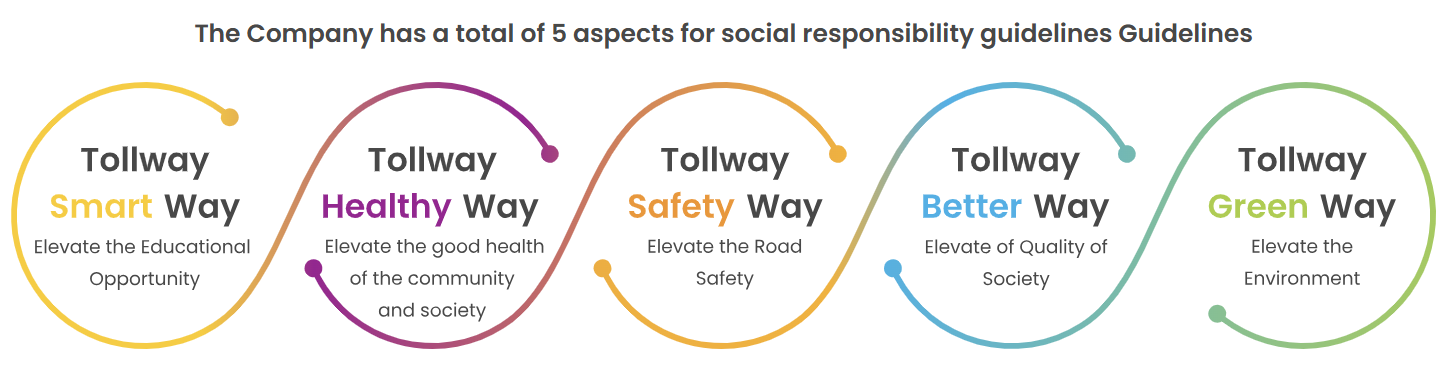
Plan Areas
| Plan Area |
|---|
| Employment and professional skill development |
| Education |
| Religion and culture |
| Forests and natural resources |
| Sports and recreation |
| Occupational health, safety, health, and quality of life |
| Disadvantaged and vulnerable groups |
| Water and sanitation management |
| Reducing inequality and promoting social equality |
Community & Social — Targets
Has Set Community & Social Targets
Yes
Targets
| Indicator | Target Areas | Base Year | Base Year — Description | Target Year | Target Year — Description |
|---|---|---|---|---|---|
| Community Engagement/Satisfaction Assessment Results | 3045 · Other name: Community Engagement/Satisfaction Assessment Results · Description: Others | 2,023 | > 80% | 2,024 | > 80% |
| The community and social satisfaction assessment indicated an average satisfaction score | 3045 · Other name: The community and social satisfaction assessment indicated an average satisfaction score · Description: Others | 2,024 | 91.75% | 2,025 | 93% |
Community & Social — Performance & Outcomes
Has Performance Results
Yes
Performance Description
Performance results for 2025 :
The Company participated in the Social Impact Footprint (SIF) assessment program for the business sector, conducted by the Thaipat Institute, in alignment with GRI Standards and other international reporting frameworks. The assessment aims to quantitatively measure social impacts through indicators such as Social Impact Footprint (number of beneficiaries), Investment per Headcount (Baht per person), and Net Equity Value (Baht). The evaluation is based on four key principles: accuracy, comparability, completeness, and reliability. The Company received a total confidence score of 77.50%, reflecting a good level of reliability in its social impact assessment. In addition, the social impact assessment was conducted in accordance with the AA1000AS (Accountability 1000Assurance Standard), covering four principles: Inclusivity, Materiality, Responsiveness, and Impact. The Company achieved a 100%verall score across all four principles, representing a very high performance level in the evaluation of project outcomes.
The Company did not identify any significant negative impacts on communities arising from its operations or social initiatives. This reflects the Company’s systematic stakeholder impact management and its strong emphasis on preventing and mitigating social risks throughout its value chain.
The community and social satisfaction assessment indicated an average satisfaction score of 93%, demonstrating the effectiveness of the Company’s stakeholder engagement process, active listening, and its ability to appropriately respond to community expectations.
Law Violation Incidents
Law Violation Incidents
| Metric | Current Year | Previous Year | Two Years Ago |
|---|---|---|---|
| The total number of cases or incidents of significant violations of laws or regulations regarding social and human rights (Cases) | 0 | 0 | 0 |
| The total number of cases or incidents that cause significant labor disputes (Cases) | 0 | 0 | 0 |
| The total number of cases or complaints related to consumer rights violations (Cases) | 0 | 0 | 0 |
| The total number of cases or complaints related to partner rights violations (Cases) | 0 | 0 | 0 |
| The total number of cases or incidents that cause disputes with the community/society (Cases) | 0 | 0 | 0 |
| The total number of cases or incidents related to cyber security or customer data breaches (Cases) | 0 | 0 | 0 |
| The total number of cases or incidents related to safety and occupational health at work (Cases) | 0 | 0 | 0 |